


Do you know why mangroves are essential for us to survive?
Most people have walked past one without noticing. A tangle of roots at the edge of a creek, half in the water, half out. They line the UAE coast from Abu Dhabi to Ras Al Khaimah, and across the tropics they sit between land and ocean doing work nothing else on the planet can do.
This is the first half of the story. The second half is what we decided to do about it.

Part one: why they matter
A tree that should not exist
Salt water kills trees. The roots cannot drink it, the mud has no oxygen, and twice a day the tide floods everything. Any other species would die within weeks.
Mangroves evolved around this. Some filter salt at the root. Some push it out through their leaves. Their roots grow above the mud like stilts and take in air directly, holding firm in ground closer to soup than soil. A forest that lives where forests are not supposed to live. That is exactly what makes it valuable.
Four times more carbon than a rainforest
When people think carbon and trees, they picture the Amazon. A mangrove stores up to four times more carbon per hectare than a tropical rainforest.
The reason is the mud. A rainforest keeps most of its carbon in wood and leaves, and releases it when the tree dies. A mangrove drops leaves and roots into waterlogged mud with almost no oxygen, so nothing decomposes. The carbon stays locked underground for centuries, as long as the forest stands.
Up to 80 percent of a storm’s energy, gone
The roots that hold the tree up also hold the coast together. When waves hit a mangrove belt, the roots break them apart. A coastline with mangroves can lose up to 80 percent of a storm’s wave energy before it reaches land.
Villages behind mangroves flood less, lose less land and recover faster. The ones that cleared theirs for ponds, ports or hotels learned what the trees had been doing only after they were gone.
Three out of four tropical fish start here
Below the waterline the roots become a nursery. The gaps between them are calm, shaded, full of food and too tight for most predators. Around three quarters of the fish caught in the tropics spend part of their early life in a mangrove.
Reef fish, prawns, crabs, the catch that feeds coastal towns across Africa and Asia. Remove the mangrove and the reef further out empties within a few seasons.
More than a third lost since 1980
In forty years the world cleared more than a third of its mangroves. Shrimp farms, coastal development, firewood, and in many places simply not knowing what was being lost.
The part that matters: mangroves are one of the few ecosystems that can be restored at speed. Plant seedlings in the right mud, in the right spot, and within a few years the roots take hold, the fish return and the carbon starts accumulating again. One tree, in one place, does measurable work.

Part two: why we plant them
Why Kenya
Kenya’s coast once held some of the densest mangrove forest in East Africa. Long stretches were cut for timber, charcoal and salt pans, leaving villages open to the Indian Ocean and fishing grounds thinner every year.
EarthLungs is a reforestation organisation working on that coast. Local teams collect propagules from the surviving forest, raise them, and replant degraded creeks and mudflats. The people planting are from the communities that depend on the forest, and the work is paid. That is what makes it last.
Why verified
Planting a tree is easy to claim and hard to prove. That is why we work through Veritree. Every planting site is mapped, every planting event is logged with location and date, and the sites are monitored over time, so a tree that was planted is a tree that is still there. A brand working through Veritree cannot just say it planted a forest. It has to show where.
Why every item
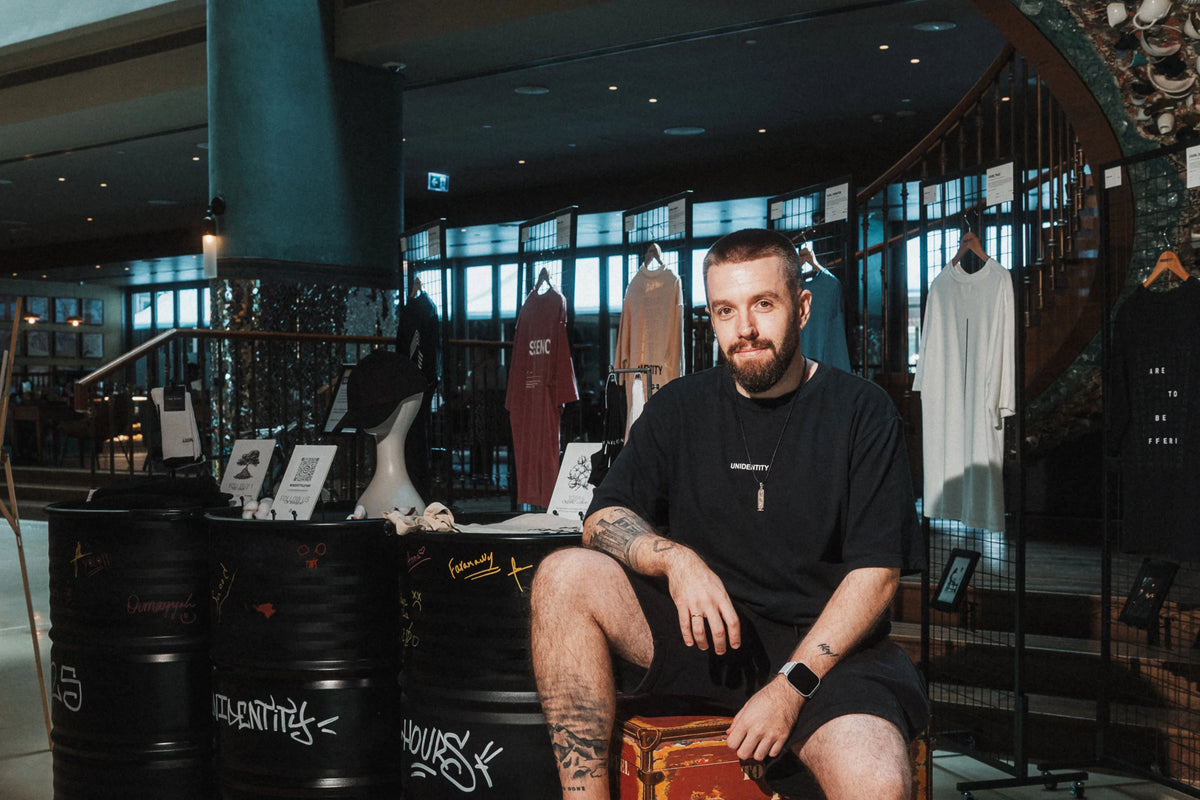
Since the end of 2025, every item bought from Unidentity plants one mangrove in Kenya, through Veritree and EarthLungs.
Not a percentage of profit. Not a seasonal campaign. One item, one tree, every order.
Per order it is a small thing. Over time it becomes a stretch of coast that was bare and is not anymore. That was the point from the start.
One item. One mangrove.


Leave a comment
This site is protected by hCaptcha and the hCaptcha Privacy Policy and Terms of Service apply.